The anonymous developer behind kempton.watch, interviewed by his own pen name: why no name, why AI, and why it shouldn't matter.
The last of four posts on how the site was built, about the person behind it. Piet Speurder, the pen name, interviews the anonymous developer: why anonymous, why AI, why you should check the record rather than trust him.
Two flat subscriptions, about US$3 000 of metered work, and what it did and did not buy.
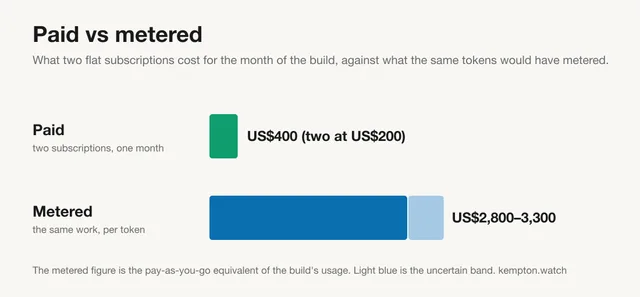
The build ran on two flat subscriptions, US$400 for the month (US$200 each). Metered at pay-as-you-go rates, the same work would have cost US$2 800 to US$3 300. What it cost, what the money bought, and the shape of the week.
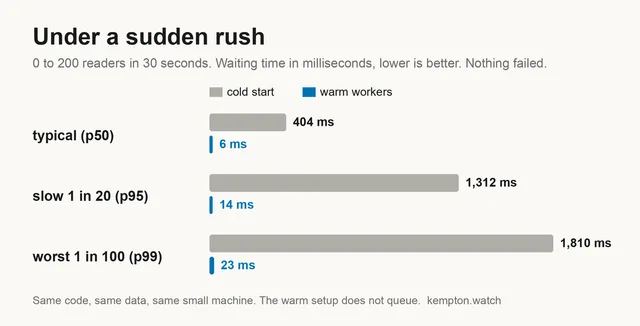
The rule I set in advance said don't switch. I did anyway: under a sudden rush, the slowest page went from 1.3 seconds to 14 milliseconds.
When a story breaks and a crowd arrives in a minute, does the site hold? What it runs on, why it moved to warm workers against its own rule (for the spike, not the stopwatch), the benchmark numbers, and a forecast of what breaks first.
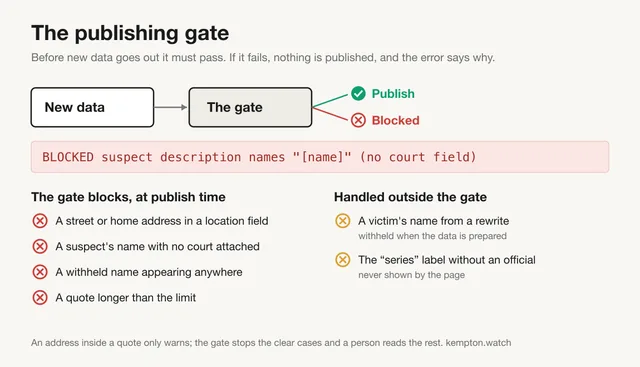
The record's rules are code. A gate stops any release that breaks them, and a person reads every security finding. Here is where the checks are strong, and where they are not.
A site that holds tips and sensitive details owes people care. How the record's rules are written as code and refused at publish time, what the 816 tests guard, where the checks are weaker, and what an AI security audit did and did not find.